April 27, 2026 · Field notes
What Ship by Sunday does
Ship by Sunday is a codebase-first shipping system: it captures product truth, generates an agent-ready Codebase, and gives builders a durable path for turning AI work into a real product.
Product view
A weekend build system for real products
Ship by Sunday turns a rough product idea into the product truth, agent-ready files, and Codebase path a builder needs before asking AI to execute.

Ship by Sunday is not another prompt pack, another course, or another generic starter template. It is a codebase-first shipping system for people who can get software moving, but keep losing the thread between the idea, the prompt, the code, and the launch.
The product does one simple job: it turns what you are trying to build into durable context. That context becomes a Ship by Sunday Codebase: generated files, setup guidance, and agent-ready docs shaped around the product instead of around a blank template.
It starts by locking the product truth
Most AI builds do not fail because the model is too slow. They fail because the product truth is vague. The user, problem, promise, scope, design direction, pricing logic, and setup constraints live in scattered chats and half-decisions.
Ship by Sunday starts by pulling those decisions into one place. The codebase flow asks for the product definition first, then keeps narrowing until the build has a clear target. The point is not to plan forever. The point is to stop re-explaining the same product every time you open a new tool.
It turns that truth into an agent-ready Codebase
Once the product truth is stable, Ship by Sunday compiles it into files different tools can actually use. The design material carries the visual direction. The marketing material carries the public story. The build plan carries the implementation intent. The prompt guidance gives AI tools the same scope boundary instead of a stale summary.
Those Codebase files are the important part. They make the context reviewable, reusable, and portable across sessions. A builder can hand the same product truth to Codex, Claude, ChatGPT, a designer, or their own future self without restarting from a blank chat.
Codebase
The output is a working product brief the repo can keep using
A Ship by Sunday Codebase is the product contract: what the thing is, who it is for, what it promises, what is in scope, and what should not drift while the build is moving.
The goal is not to create a prettier planning document. The goal is to create the handoff the implementation can trust. When the product truth is file-shaped, every later change has something concrete to compare against.
That is what makes the system different from a prompt library. The prompts are downstream of the product contract, not the source of truth.
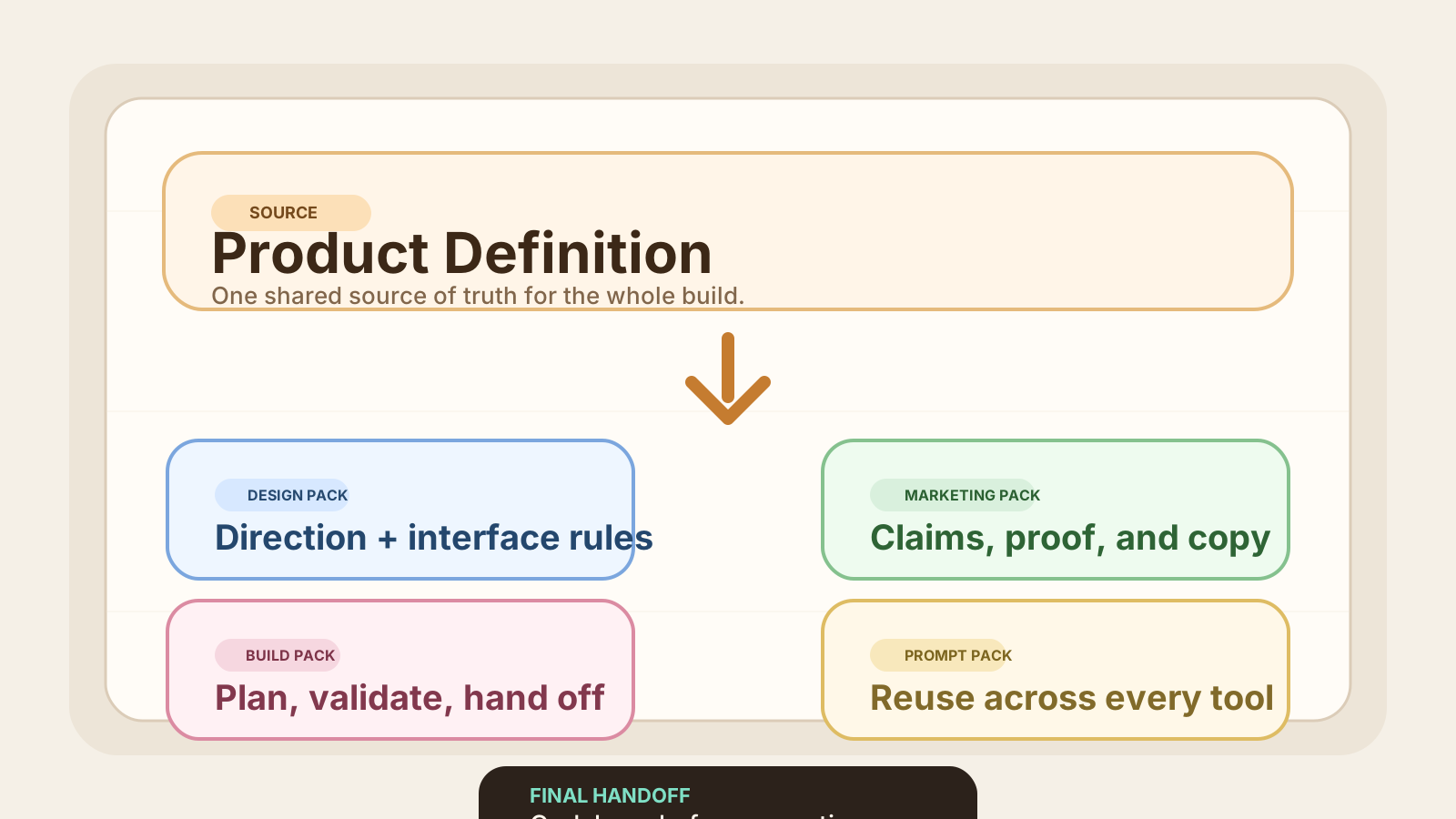
The Codebase turns one product truth into focused instructions for design, marketing, build, and prompting.
It gives the build a codebase-shaped path
Ship by Sunday also points the work at a generated Codebase instead of leaving the builder with only prose. The Codebase path is meant to carry real product surfaces: auth, billing, docs, protected workspace structure, public marketing surfaces, and the seams where agents should keep working.
That does not mean every project becomes the same app. It means the first build starts from a durable shape. The product truth, the public copy, the route map, and the Codebase assumptions all come from the same contract.
Execution
The system is built for the handoff after the first draft
The first AI pass is rarely the finish line. Ship by Sunday is designed around the review loop: what changed, what still matches the codebase, and what the next agent should know before editing.
A weekend build is useful only if it still makes sense on Monday. That is why the system cares about contracts, routes, generated files, public metadata, and the difference between source truth and generated output.
The builder should not have to rebuild context from memory every time they ask for another feature. The repo should carry enough truth that the next change starts from the product instead of from vibes.
The loop is product truth, Codebase files, implementation, review, then the next scoped change.
The goal is to keep shipping after the weekend
The promise is not that one prompt magically creates a company. The promise is that a founder or technical builder can move from idea to a reviewable product system without scattering the decisions that matter.
By the end, Ship by Sunday should give you three things: clear product truth, an agent-ready Codebase, and a durable path that can keep absorbing future changes. That is the thing it does. It makes AI-assisted building less like improvising in a chat window and more like improving a product that already has a spine.
Author
Parker Rex
Founder, Ship by Sunday
From the same system
Agent doctor for web apps
Ship by Sunday turns phone-started exec loops into worker packs, QA paths, and an aligned starter path.